
How to hitch up a Go-Pod
A simple step-by-step guide to the hitching components, coupling head, jockey wheel, breakaway cable and final checks before towing your Go-Pod.
On this page5 sections
What does “hitching up” mean?
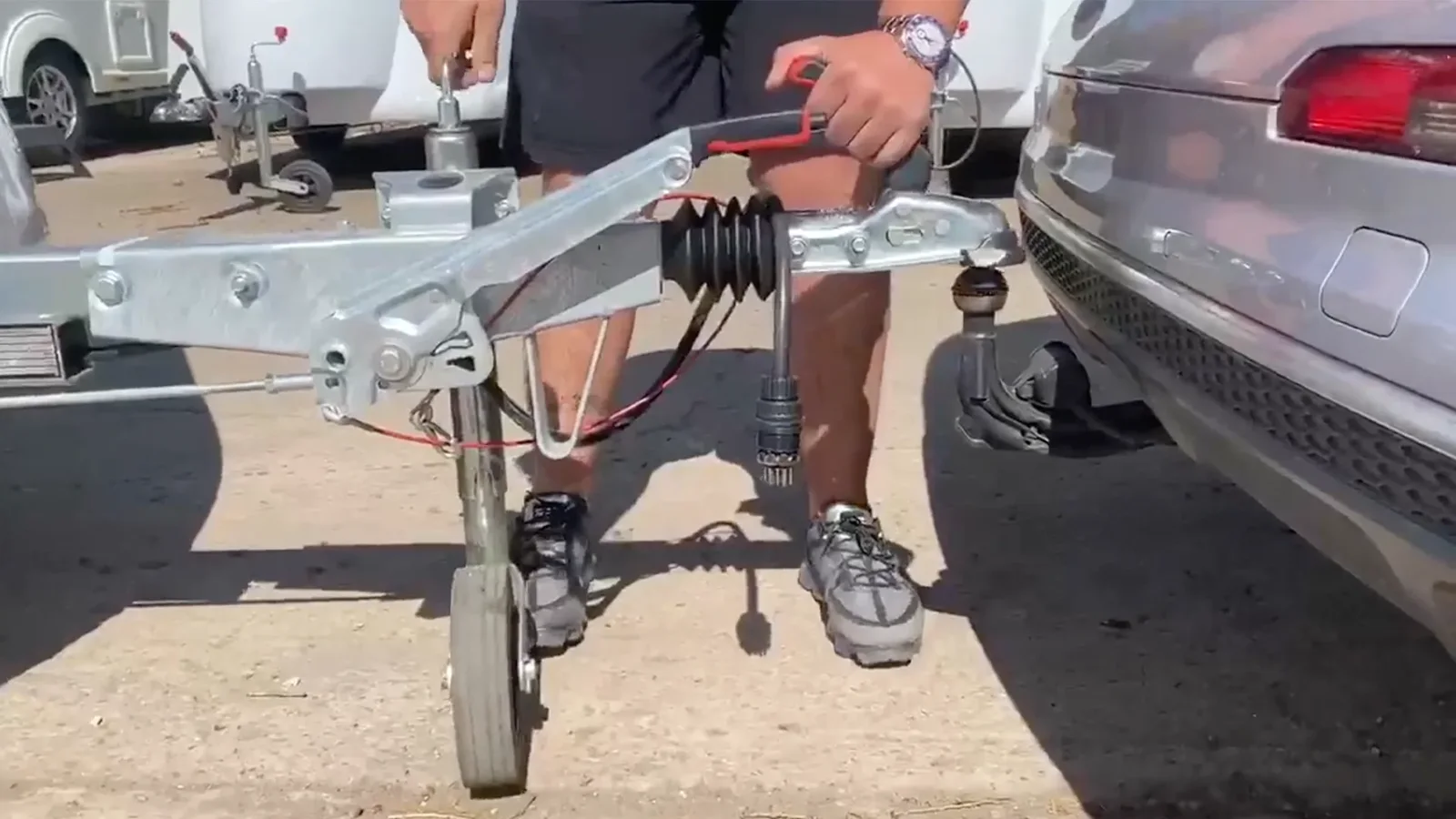
Hitching up simply means connecting your Go-Pod safely to your tow vehicle before you drive away. The coupling head attaches to the tow ball, the breakaway cable is connected as a safety backup, and the towing electrics plug into the vehicle so the road lights work.
Once the Go-Pod is attached, the jockey wheel is raised and clamped away from the road, then final checks are made before towing. It is a short process, but it is worth doing slowly and in the same order every time.
In plain terms, you are checking:

• The Go-Pod is securely attached to the tow ball.
• The breakaway cable and electrics are connected.
• The jockey wheel is raised, clamped and clear of the road.
• The lights, handbrake and final towing checks are complete.
The parts you’ll use when hitching up
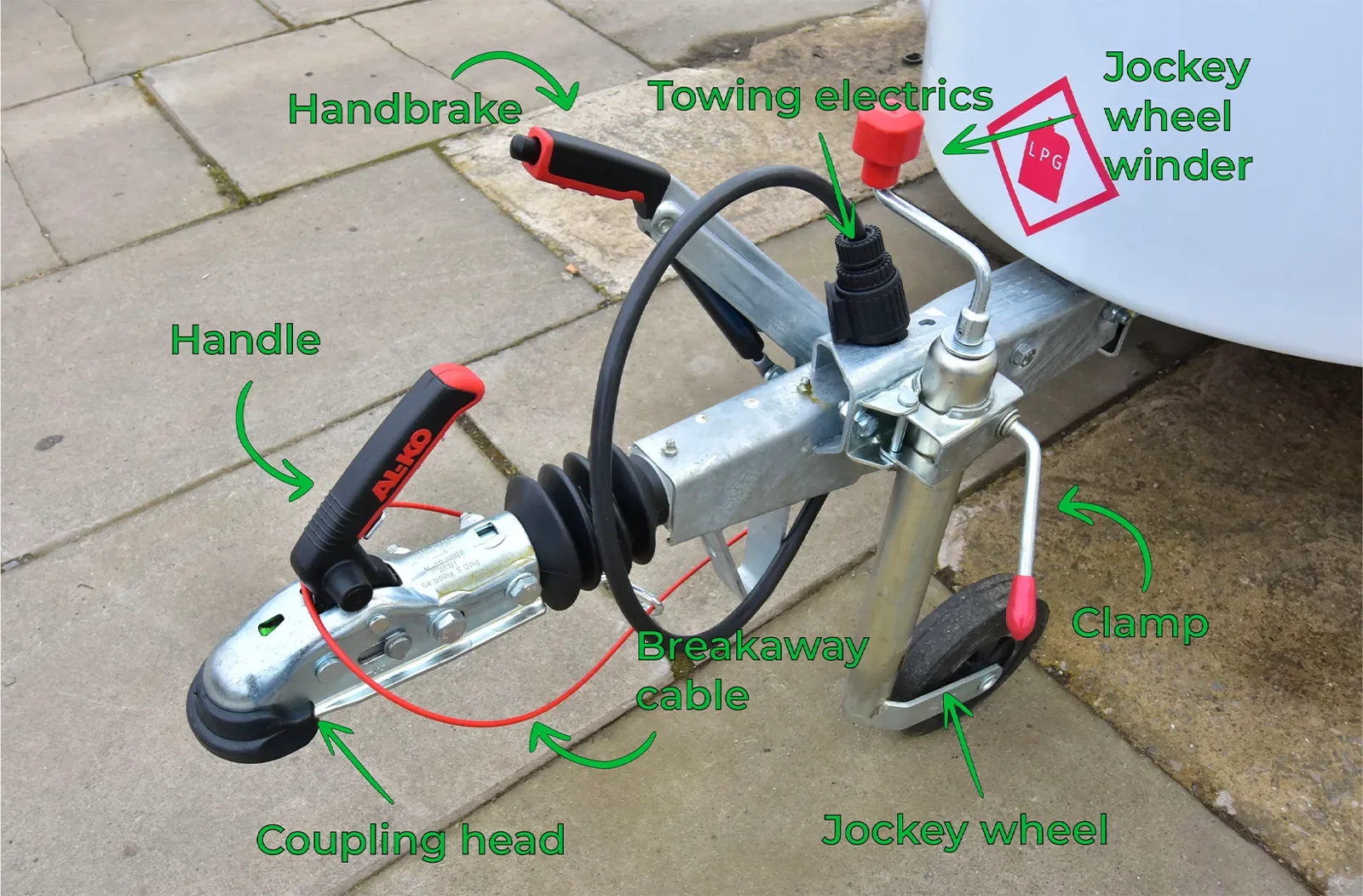
Before following the steps, it helps to know the names of the main hitching parts. The diagram shows where each component sits on the front of the Go-Pod.
Component quick guide
Handbrake
Manually applies the handbrake to prevent movement of the Go-Pod.
Jockey wheel
Keeps the Go-Pod level and steady, and allows movement without use of a towing vehicle.
Clamp
Secures the jockey wheel in the current position.
Jockey wheel winder
Used to raise and lower the jockey wheel.
Towing electrics
Connects to the 13-pin Euro electrics socket, powers driving lights and charges the leisure battery.
Coupling head
Attaches to the tow ball to form a secure connection with the towing vehicle.
Handle
Used to release the coupling head from the tow ball.
Breakaway cable
Failsafe device that will automatically apply the brakes of the Go-Pod in the event of decoupling from the tow ball in transit.
How to hitch up on level ground

Follow the same order each time: position the Go-Pod, lower the coupling head onto the tow ball, connect the safety and electrical systems, then raise and secure the jockey wheel before towing.
Important: only move the Go-Pod by hand on level ground
If your Go-Pod is not on level ground, do not disengage the handbrake as this may cause it to roll. Move the Go-Pod into position using the tow vehicle instead.
Step 1
Disengage the handbrake and move into position
On level ground, disengage the handbrake so you can move the Go-Pod into position. Raise the jockey wheel slightly so it is just higher than the top of the tow ball, then move the coupling head directly above the tow ball.
Step 2
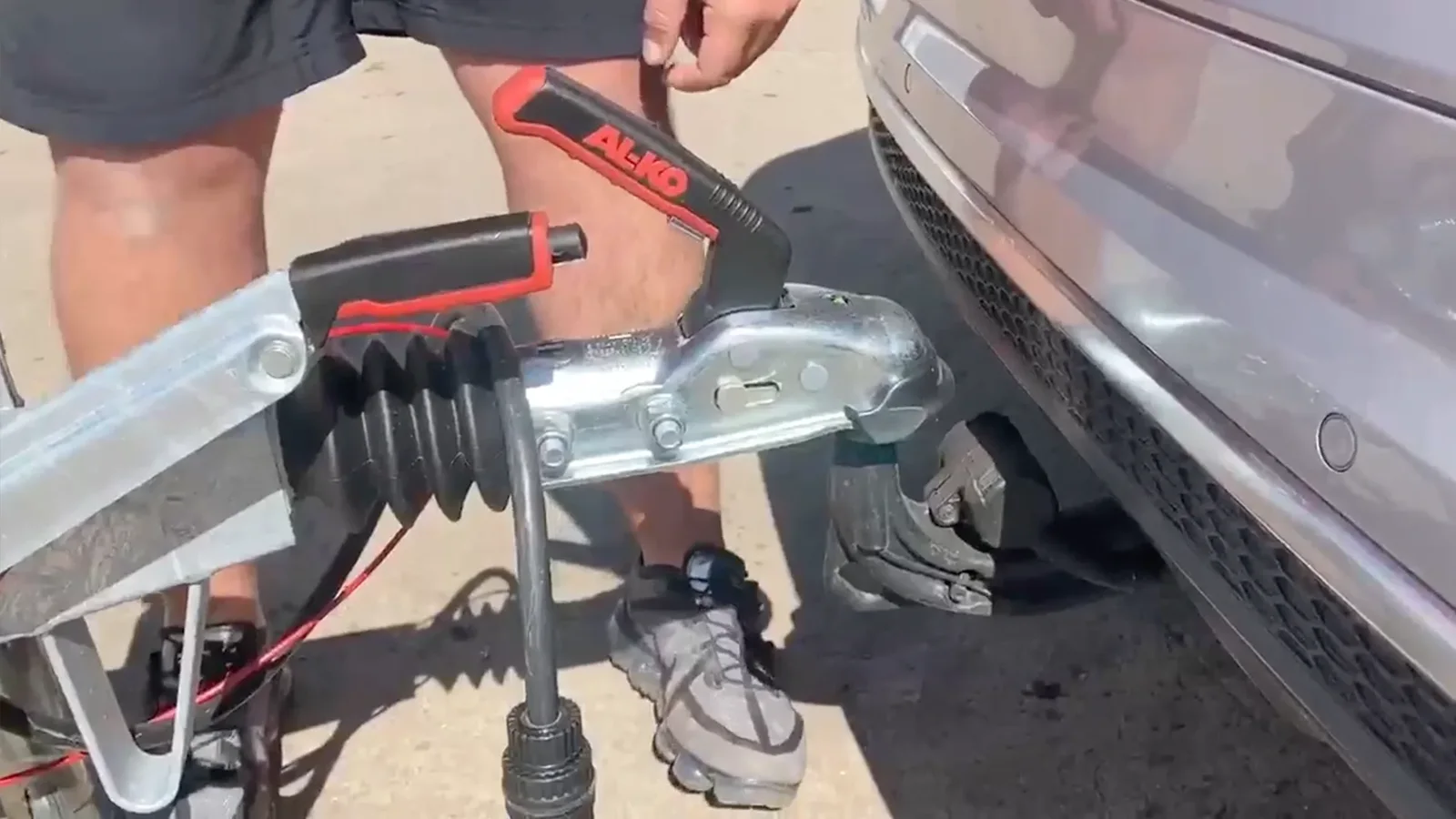
Wind the jockey wheel down until attached
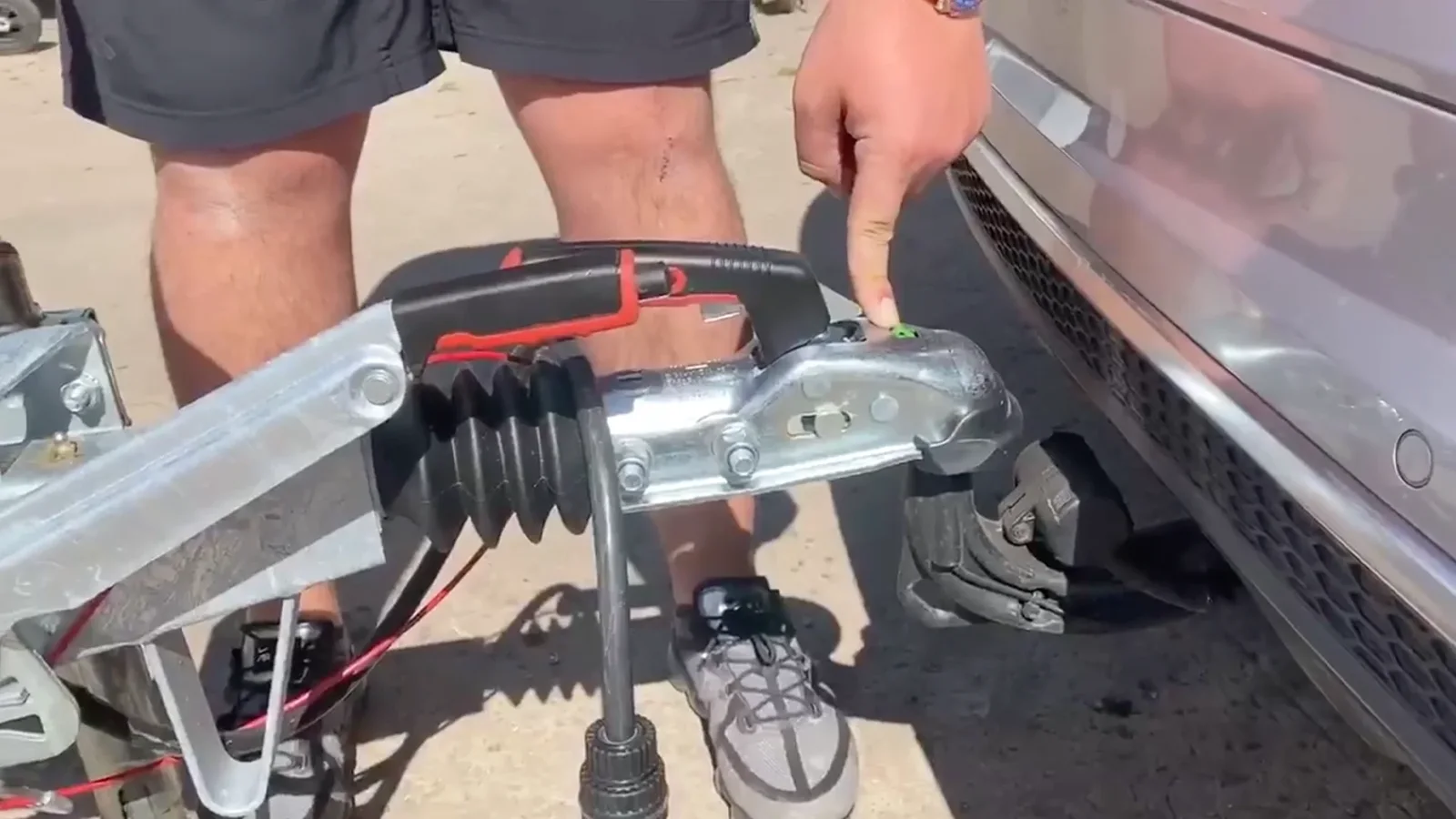
Wind the jockey wheel down, counter-clockwise, until the coupling head connects with the tow ball. You’ll know it is connected when the handle clicks into the down position and the green indicator in front of the handle pops up.
Step 3
Attach the breakaway cable and electrics
Loop the red breakaway cable over the coupling head and tow ball, then connect the Go-Pod’s electric plug to your vehicle’s 13-pin Euro electrics socket.
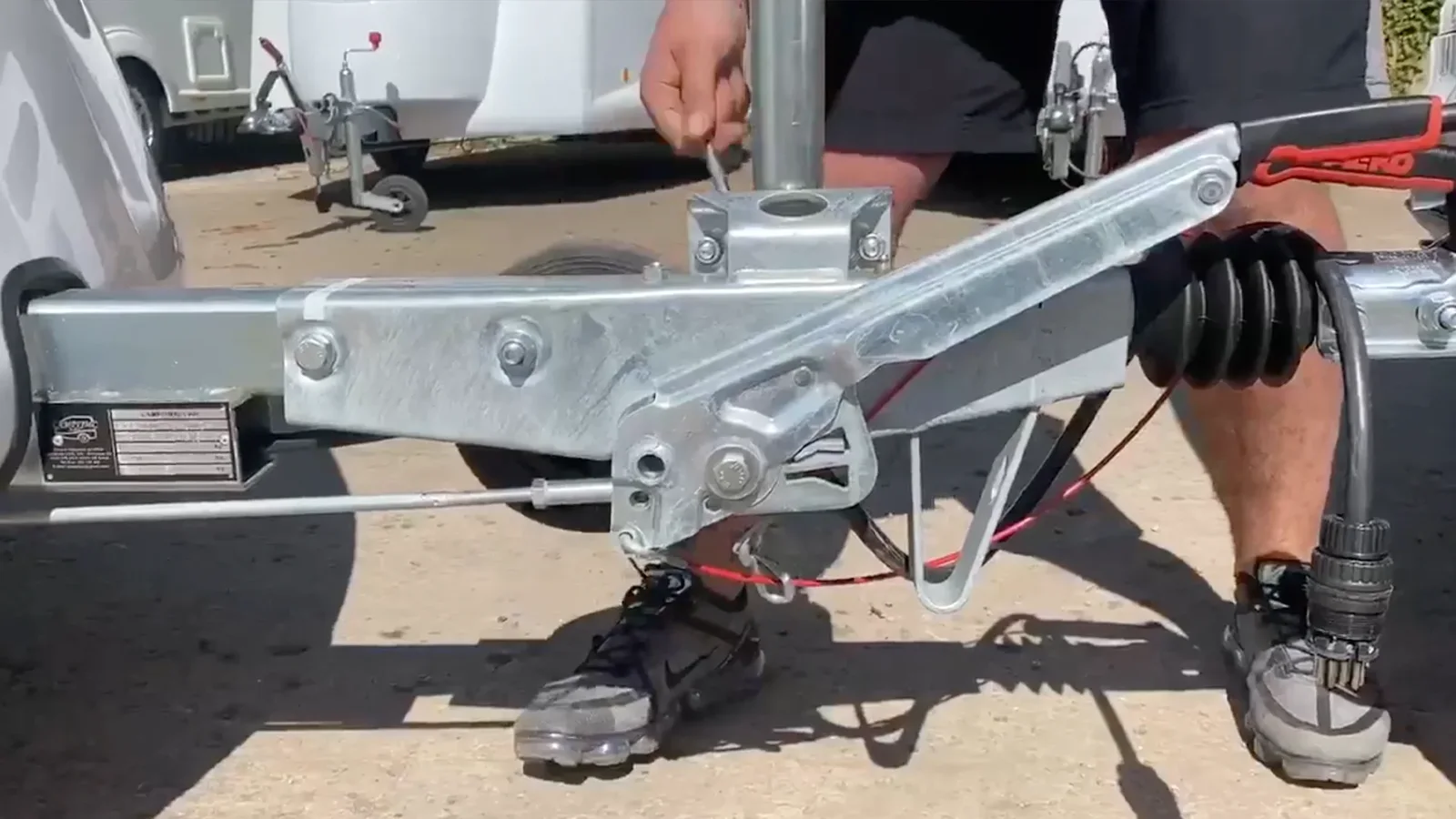
Step 4
Wind the jockey wheel up, lift and clamp
Wind the jockey wheel up until the bracket sits in the groove. Release the clamp, pull the jockey wheel upwards as far as it will go, then re-apply the clamp. Check it is firmly in place and clear of the road.
Watch the hitching-up process
The written steps above are useful for reference, but it can be easier to see the sequence in action. Use this video alongside the guide when learning the process for the first time.
Take a moment before you tow
This guide is intended as practical owner guidance only. Always follow the instructions supplied with your Go-Pod, tow vehicle, coupling equipment and any fitted accessories.
If anything does not look or feel right, stop and check before driving away. Do not tow if the coupling, breakaway cable, electrics, jockey wheel or lights are not correctly secured and working.
Before driving away, check:
• Coupling head is securely attached to the tow ball.
• Coupling handle is down and the green indicator has popped up.
• Breakaway cable is attached correctly.
• Towing electrics are connected and road lights work.
• Jockey wheel is raised, clamped and clear of the road.
• Handbrake is released only when you are ready to tow.
Need more help?
Browse more practical Go-Pod guides covering batteries, heating, gas bottles, motor movers and other useful touring basics.