
Jackery solar generators with a Go-Pod: mains power off grid, without the noise
This post contains affiliate marketing links. If you purchase a product after clicking one of these links, we may earn a small commission.
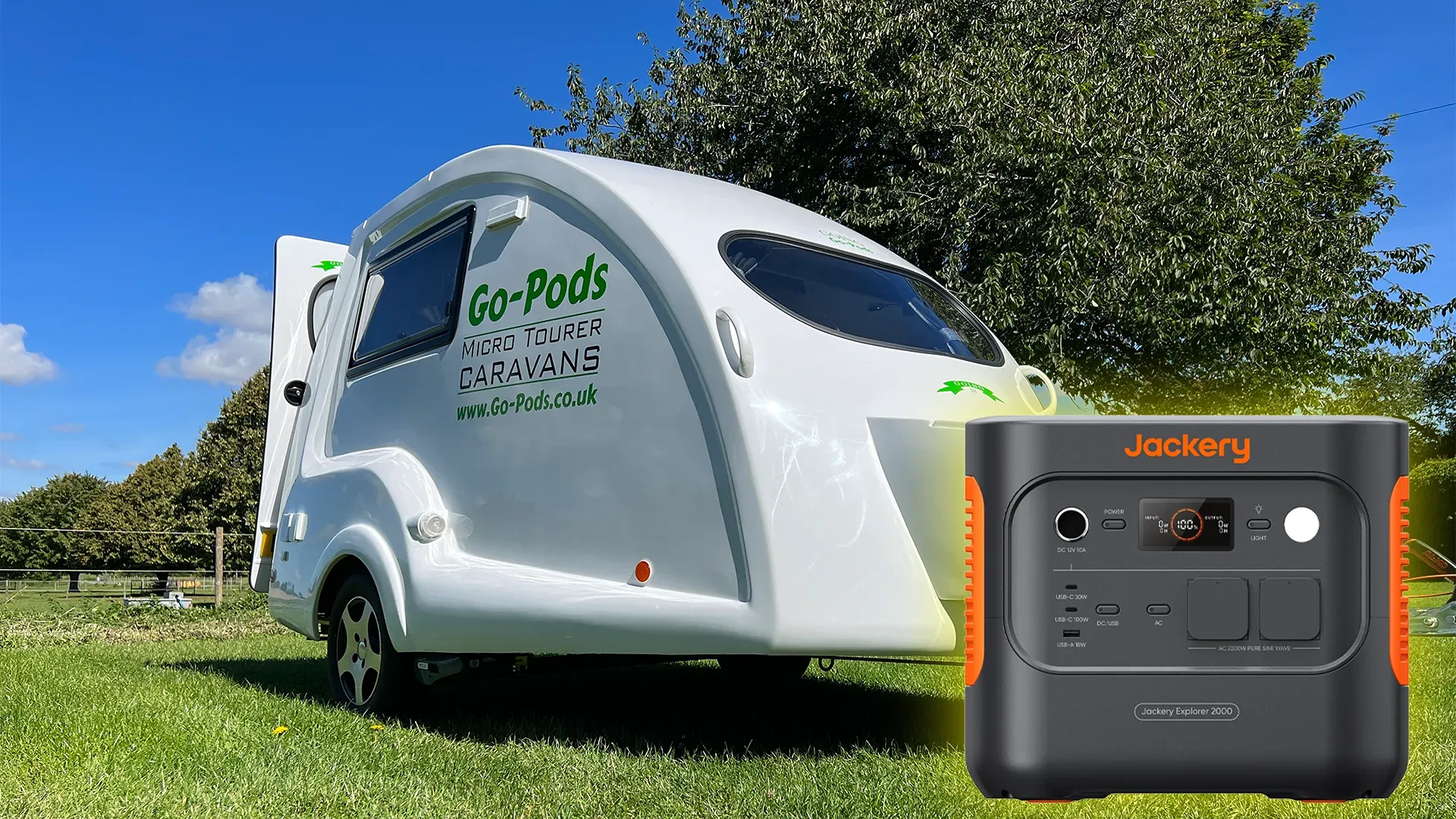
Maybe your Go-Pod doesn’t have a fitted solar panel, or perhaps you’d like the convenience of running mains electrical items while camping off hook-up.
Adding a portable solar generator to your kit is like taking your own sustainable power station along, offering versatility and independence.
What we tested & why
We tested the Jackery 1000 v2 and Jackery 2000 v2 Solar Generators as options to complement the Go-Pods’ existing onboard electrical system. Both are essentially sophisticated batteries that provide various AC and DC power outlets, suitable for running mains electrical equipment and recharging your devices.
There are a selection of models in the Jackery range, but the main differences between the versions which we looked at were weight, size and power output. Both units recharge from mains 240V, via a car charger lead or from Jackery’s powerful solar panels.
With the right set-up, you can add up to a whopping 400W of solar input, helping to offset day-to-day power use while you’re off-grid. The Jackery runs clean and quiet; imagine a petrol generator but without the noise, fuel and fumes.
The 1000 v2 has a capacity of 1070Wh and an output of 1500W - compared to the 2000 v which has a 2043Wh capacity and 2200W output.
Why it works so well with a Go-Pod
No permanent modifications required
Gives more flexibility for off-grid weekends
Allows for stopovers at sites where 240v isn't available
Easy way to keep devices charged & run mains items
Powering the Go-Pod
Because the Jackery has standard 3-pin socket outlets, you can plug the Go-Pod’s EHU lead straight into it (with a 3-pin adapter) and power the Pod in the same way you would on a hook-up pitch, while staying within the Jackery’s output limits.
It’s worth remembering that appliances with high power consumption like kettles, fan heaters and hair dryers can use a lot of power, so check the wattage of your mains items and use the larger draw items sparingly.
Practical highlights:
Rugged design: feels properly made, unlike some other popular options.
Silent, green power: no fumes, no petrol, no noise, no maintenance routines.
Portable and easy to move around; the 1000 v units are very manageable; larger units are heavier but still practical and well worth the trade off.
Built-in light: a genuinely handy detail for awnings and late-night rummaging.
Charge as you camp
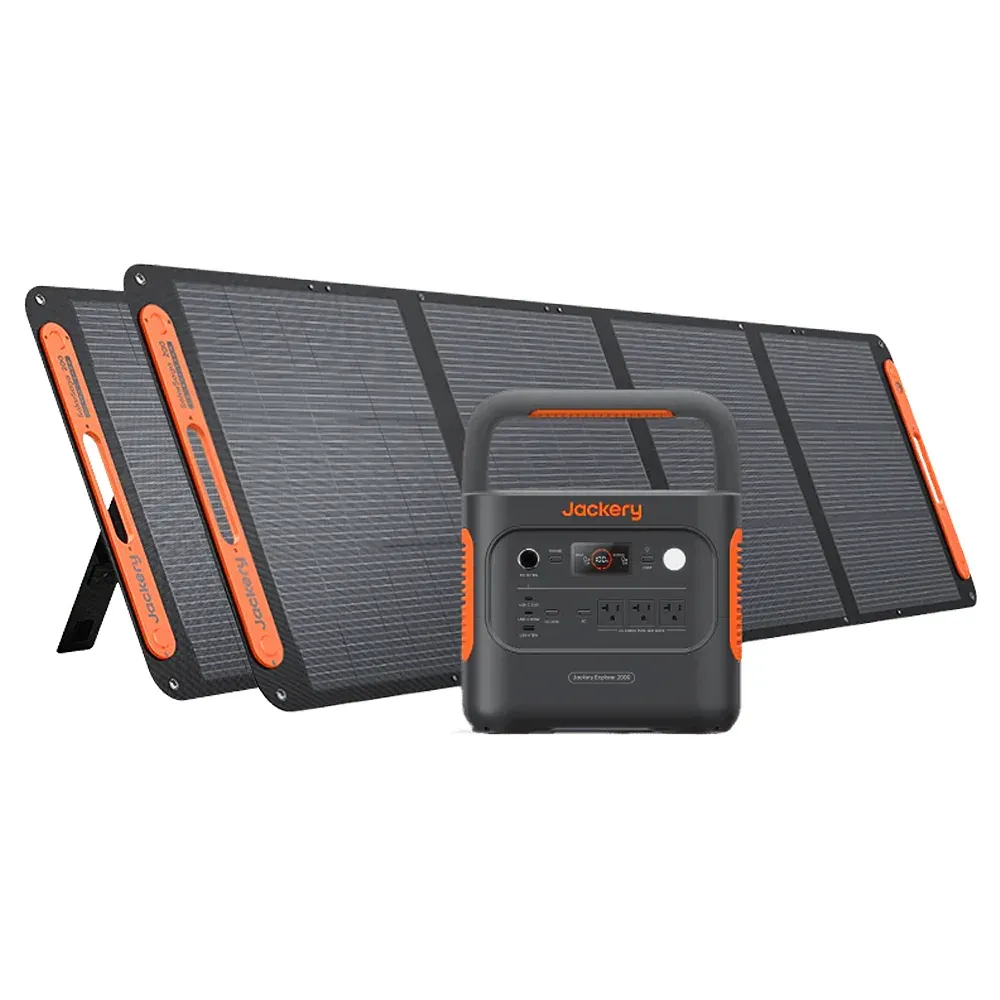
Pair the Jackery with Jackery solar panels and it becomes much more than “just a big battery”. In decent conditions, solar can keep you happily ticking along day-to-day.
You can add up to 400W of solar input, which can deliver impressive charging even when the weather isn’t blazing, although of course the sunnier it is, the more the panels will output. That helps cover those typical camping loads: charging devices, lighting, and a bit of entertainment.
Doubles as a home backup
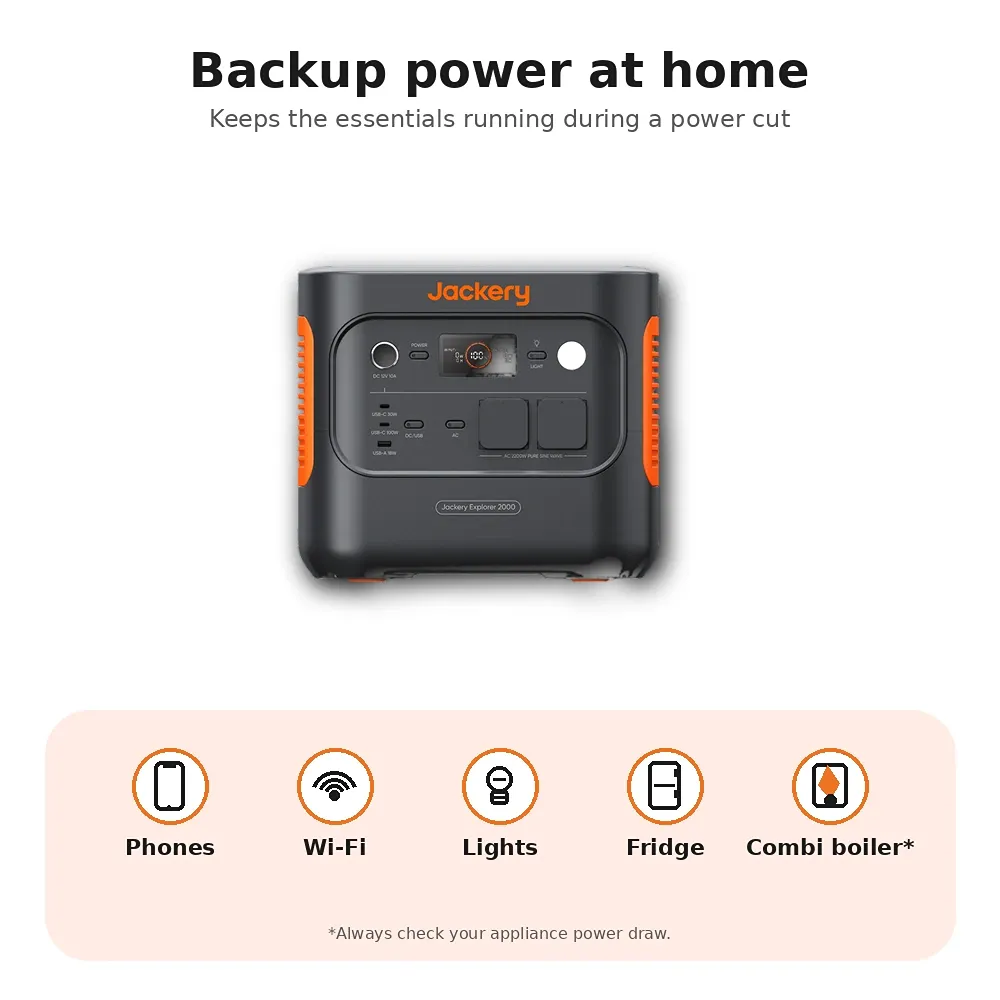
One bonus we didn’t fully appreciate until we had one is that it’s genuinely useful at home too. In a power cut, a Jackery can keep the essentials ticking over until the mains is back. Phones, lights, Wi-Fi and a laptop are all easy wins.
We even tried it on our fridge freezer. The 1000 v handled it without fuss, and the Jackery’s display showed it drawing surprisingly little power, great for keeping food from spoiling during an outage.
Depending on your set-up, it may also run combi boilers, which means you’ve got a way to keep the heating running if there’s a winter power cut. As always, check the power consumption of appliances before you plug them in.
The technical bits
Battery lifespan: how many recharges?
Both the Jackery 1000 v2 and 2000 v2 use a LiFePO4 (LFP) battery rated for up to 4,000 charge cycles to around 70% capacity.
Here's what Jackery have to say:
If you go camping and use the power station every week, for 20 years, up to 80% of the battery’s max capacity will still be maintained. (Based on one full charge per week). When fully charged, the ultra-long battery can go on standby for up to an amazing 4 years. Perfect for camping, RV life, home emergency, and outdoor professional usage.*
How long does it take to charge?
Jackery portable power stations offer rapid charging. Featuring wall charging, car charging, and solar charging, the Explorer 1000 Pro can be fully charged within 1.8 hours. Also, pass-through charging technology allows recharging and charging appliances simultaneously. Jackery performs in a temperature range of -10c to 40c), providing you with a stable power supply from summer to winter.*
Model comparison: 1000 v2 vs 2000 v2
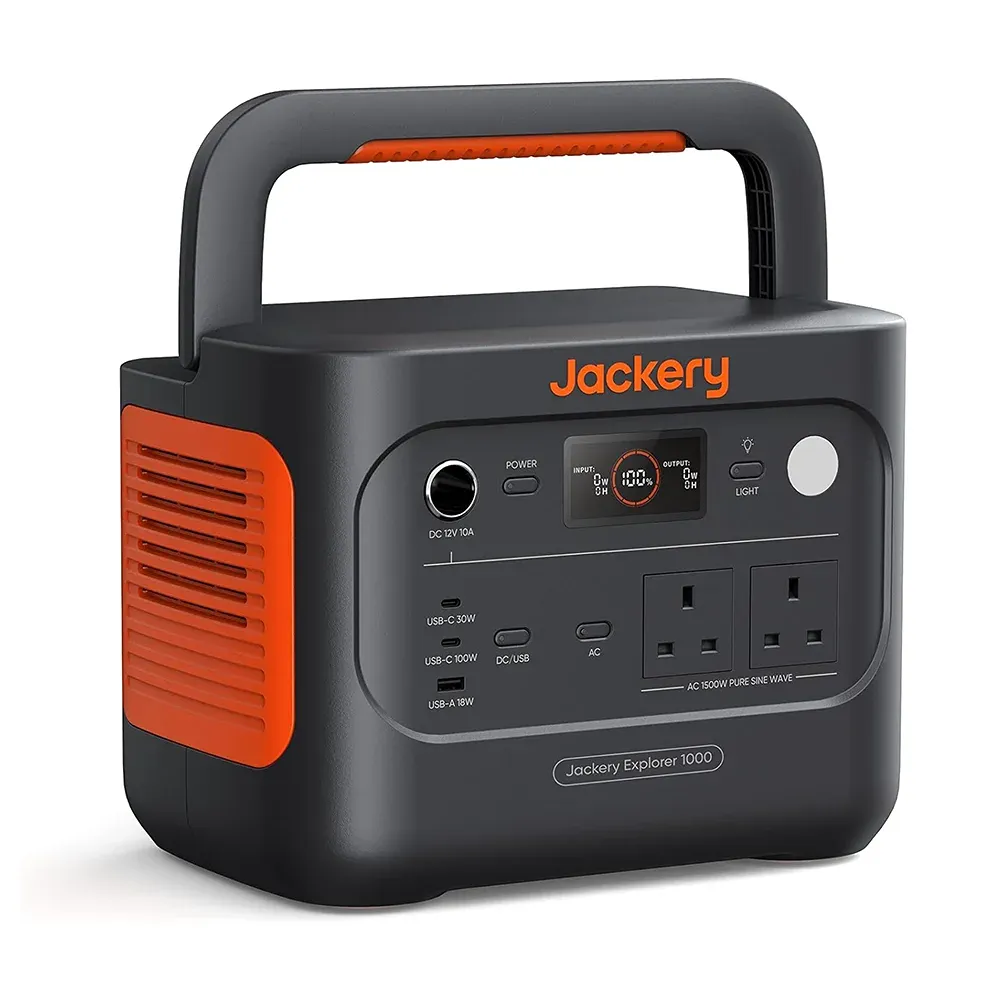
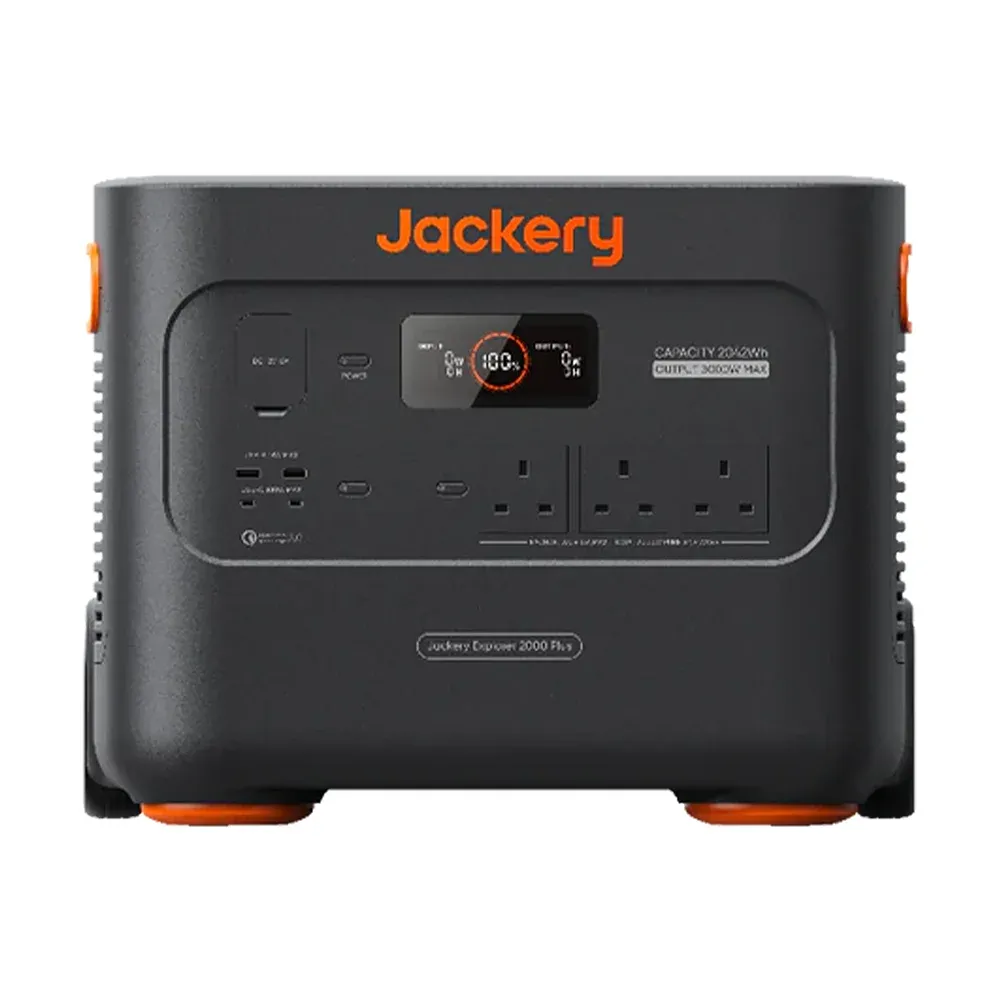
Jackery Explorer 1000 v2
Price: £449.00 incl. VAT*
Capacity: 1070Wh
Output: 1500W
Dimensions: 32.7 x 22.4 x 24.7 cm
Weight: ~ 10.8 kg
Ports: 2 x AC outputs, 2 x USB-C ports, 1 x USB-A port, 1 x car port
Jackery Explorer 2000 v2
Price: £899.00 incl. VAT*
Capacity: 2042Wh
Output: 2200W
Dimensions: 33.5 x 26.4 x 29.2 cm
Weight: ~ 17.5 kg
Ports: 2 x AC outputs, 2 x USB-C ports, 1 x USB-A port, 1 x car port
*At time of publishing this article
Our verdict
An effective, quiet, rechargeable, portable mains-style power for your Go-Pod without fitting a permanent solar setup, the Jackery 1000 v2 and 2000 v2 are a genuinely practical solution.
Fast charging and compact with the ability to power the Go-Pod via the EHU lead is a real standout feature, and adding solar makes it even more useful for extended off-grid trips. Robust and light enough to take with you on days out too, to power a range of outdoor activities such as e-bikes, projectors, air pumps, fans… anywhere.
Not super cheap but very good value and definitely worth it.
Comments